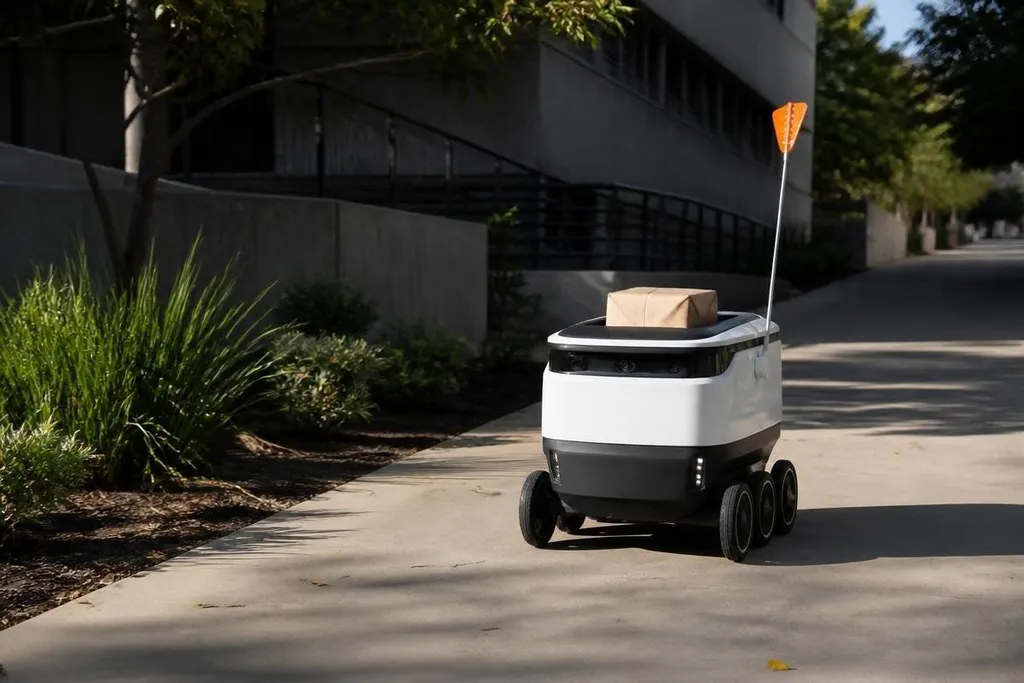
A delivery robot can move a parcel across a site without a driver, but that fact says little about whether it works outside a demo. The global race needs a tougher measure: where the robot runs, what it carries, what it costs, and how often people must step in.
A source-based comparison needs named companies, dated trials, robot models, and measured results. None of those details are supplied here, so this article sets out the evidence needed to judge the field without inventing a leader.
- The task comes first: a campus parcel route has different needs from a public sidewalk.
- Human help counts: remote operators can change the cost of each delivery.
- A working trial needs numbers: distance, payload, delivery time, stops, and failures belong in the report.
The robot has to fit the route
Delivery robots serve a few different jobs. A small wheeled robot may carry food across a campus, while a larger vehicle may move parcels between buildings or along public roads. Those jobs need different sensors, speeds, storage spaces, and safety controls.
The route changes the test. A robot on private land may face marked paths and known obstacles. A sidewalk robot must deal with people, kerbs, crossings, poor weather, parked objects, and access points that change during the day.
That is why a single claim such as “autonomous delivery” is too broad. Autonomous means the robot can perform part of the trip without direct control, but the report still needs to say when a person takes over and why.
The useful numbers are easy to name
A serious trial should publish the robot’s payload in kilograms, its travel range, its top speed, and the time it needs to recharge. It should also state how many deliveries it completed, how many trips stopped, and how often a remote operator helped.
Those figures answer practical questions for a fleet manager. A robot that carries only one small parcel may work for meals but fail for grocery orders.
Long range may still save little time if the robot needs frequent checks at crossings or building entrances. The handoff matters too: the customer may open a locked compartment with a code, collect the parcel from a staffed point, or meet the robot at a fixed location. Each method changes labour needs and the chance of a failed delivery.
A locked compartment can cut doorstep contact, but it adds a code, a failed-unlock procedure, and a person who can respond. Reports at Robot24 can match those details with a named trial, measured result, or public filing. Those handoffs decide whether the safety work costs more than the delivery saves.
Safety changes the business case
A delivery robot shares space with people, so its safety system needs more than obstacle detection. It must slow down, stop, and wait when a person blocks its path. The report should explain who can stop the robot, how quickly they can respond, and what happens after a fault.
Security matters at the parcel box. The system needs a clear way to confirm the recipient and record whether the compartment opened. A route can run well while the handoff still creates losses, delays, or support calls.
Weather and access also belong in the test. Rain, snow, heat, steep kerbs, lifts, and doors can change a route that worked during a short public demo. A result from one site should stay tied to that site until another trial confirms it.
What to ask before calling a company a leader
Use this checklist when a company announces a new delivery robot or a large trial:
- Name the route: record the country, site type, road access, and route length.
- Record the load: note the payload limit, compartment size, and parcel type.
- Count human input: separate fully remote driving from brief operator support.
- Check the time: compare order-to-delivery time with the existing service.
- Price the work: include staff, charging, repairs, software, insurance, and support.
- Mark the unknowns: list weather limits, access problems, and failed handoffs.
That last line keeps a trial honest. A machine can complete a route and still need more work before a fleet can run there every day.
The next result that matters
The field needs repeatable reports from more than one route. Until those reports include payload, delivery time, human interventions, cost, and failure rates, the global race remains a set of claims rather than a clear ranking.
I’d reserve any claim of a leader for a company that publishes those numbers across several sites. The next useful announcement will not be a faster prototype; it will be a delivery robot completing paid routes with fewer interventions and a cost that operators can check.